
AI Research Assistants: Beyond Simple Search
This article delves into the sophisticated mechanisms powering modern AI research assistants, moving beyond basic keyword searches to genuine investigative processes. These systems employ a dynamic discovery approach, breaking down complex queries, cross-referencing sources, and synthesizing information iteratively. The core of their operation lies in understanding user intent, engaging in a Reason+Act loop, and leveraging advanced information retrieval techniques to deliver accurate and well-sourced answers.
Points clés
- Modern AI assistants move beyond simple retrieval to conduct genuine investigations.
- They question, explore, verify, and synthesize information iteratively.
- AI assistants use advanced language understanding to parse user request intent.
- Systems like Perplexity route queries to appropriate processes based on intent.
- Grok decides whether a live web search is necessary, including searching recent posts on X/Twitter.
- The AI engages in a deliberative loop called the ReAct pattern (Reason+Act).
- The “Act” part of the loop involves sophisticated retrieval mechanisms combining traditional search with modern AI.
- Many assistants call out to web search APIs (Bing, Google) for current results.
- Perplexity leverages its own indexed content with web crawlers (PerplexityBot).
- Advanced assistants use ranking algorithms to prioritize trustworthy, relevant sources, favoring academic journals and reputable news sites.
- The assistant uses the language model to summarize or extract key points from each source.
- Good research AIs cross-verify information across sources instead of trusting any single source.
- The system feeds curated information into the language model alongside the original question, a process called Retrieval-Augmented Generation (RAG).
- Transparent systems attach citations to specific statements, linking back to sources.
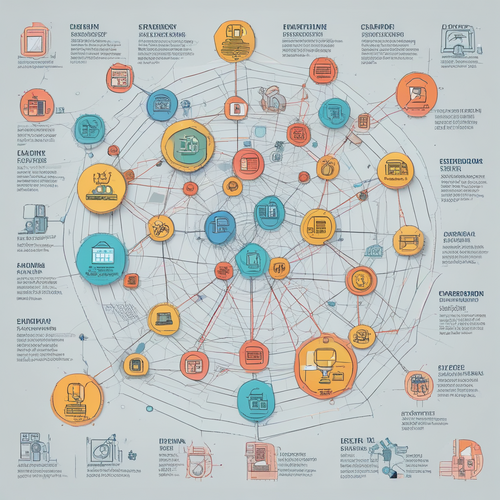
- These research assistants consist of multiple components orchestrated together, like an agent logic (following ReAct) and tools (search APIs, web page readers, LLM, context managers).
- Some systems use multiple models with different strengths, like Perplexity routing queries to GPT-4o or faster models.
- Users benefit from up-to-date knowledge, higher accuracy, less hallucination, transparency through citations, contextual responses, and lightning speed.
À retenir
So, it turns out these fancy AI research assistants aren’t just glorified search bars after all. They’re more like digital detectives, meticulously piecing together information from all corners of the internet. While they might not wear trench coats and fedoras (yet!), their ability to reason, act, and synthesize information makes them surprisingly capable research partners. Just remember, even the smartest AI still needs a human to ask the right questions – and maybe offer it a virtual cup of coffee after a long night of digging.
Sources