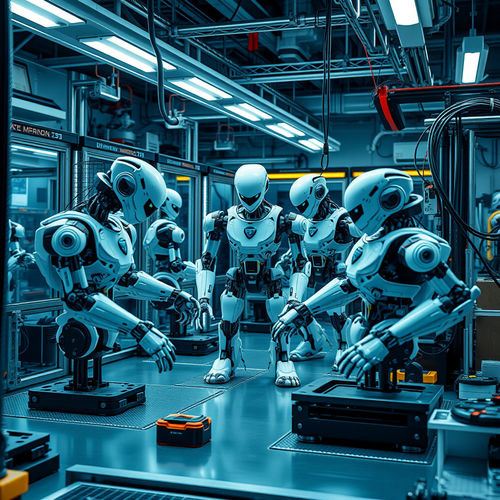

Guiding ethical, inclusive AI in global classrooms
UNESCO’s 2025 anthology maps the disruptive rise of AI across education, balancing opportunity with the risks of inequality, commercial capture, and weak governance. It convenes 21 global voices to reimagine pedagogy, assessment, policy, and ethics with equity and human dignity at the center. The work calls for a new social contract that places learners and teachers—not machines—at the heart of AI-enabled education.
Points clés
- UNESCO situates AI within the Global Education 2030 Agenda, advancing SDG 4 for inclusive, equitable, quality education and lifelong learning.
- The 2025 publication comprises 21 articles across nine sections and is released under the Attribution-ShareAlike 3.0 IGO license.
- Access gaps are stark: one-third of humanity remains offline, while advanced AI tools often require paid subscriptions, robust infrastructure, and dominant-language fluency.
- The foreword by Stefania Giannini highlights AI’s promise (tutors on WhatsApp, AI companions, avatars) and risks (privacy, ethics, sovereignty, commercial capture), urging a new social contract for education.
- Industry vs. critique: Andreas Horn proposes pragmatic AI integration with guardrails and mandated AI literacy; Emily M. Bender challenges AGI narratives and warns of commercial actors shaping education.
- Pedagogy tensions: Abeba Birhane and Carla Aerts with Paul Prinsloo caution against algorithmic personalization that narrows autonomy and entrenches inequities; Bill Cope, Mary Kalantzis, and Akash Kumar Saini envision human-centered, formative assessment with AI as a mediating collaborator.
- Recentring teachers: Ching Sing Chai, Jiun‑Yu Wu, and Thomas K.F. Chiu stress learner autonomy and critical reflection; Arafeh Karimi outlines “compassion by design” via participatory co-design, trust audits, equity-driven explainability, and teacher-led data stewardship.
- Governance imperatives: Kaśka Porayska‑Pomsta and Isak Nti Asare argue for ethics-of-care by design; Kalervo N. Gulson and Sam Sellar critique “synthetic governance” and call for democratic oversight of data-driven decision-making.
- Equity first: Vukosi Marivate, Nombuyiselo Caroline Zondi, and Baphumelele Masikisiki advance locally led, multilingual African higher education AI; Kiran Bhatia and Payal Arora champion creative agency for young women in the Global South; Yuchen Wang and Marloes Williams – van Elswijk push for inclusive, multimodal systems co-designed with marginalized communities and DHH learners.
- Policy horizons: George Siemens frames generative AI as an instrument of statecraft; Ilkka Tuomi recasts policy as collective sense-making and developmental experimentation beyond narrow “what works” evidence.
À retenir
Start small, think big, and please don’t hand your syllabus to a chatbot. Begin with basic AI literacy for teachers and students, pick one vetted tool with clear privacy terms, and set classroom guardrails before the first prompt goes in. Co-design with your community, run a simple “trust audit” (aka read the data policy), and keep humans in the loop for assessment feedback. And if someone promises AGI will mark everything perfectly, smile politely, back up your rubric, and carry on—human judgment is still very much a feature, not a bug.
Sources
Quiz sur le document: 10 questions