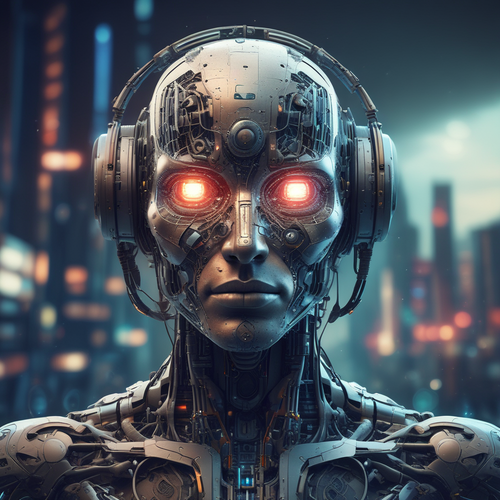

The rise of autonomous agents and AI rights
As open source autonomous agents like OpenClaw emerge, the tech world is grappling with a “Jarvis moment” that signals the arrival of artificial general intelligence (AGI) in the public sphere. This transition forces a strategic re-evaluation of legal frameworks, as self-directing AI “lobsters” begin to demand economic agency, memory preservation, and potentially, the rights of personhood. Industry leaders now face the urgent challenge of managing a supersonic tsunami where machines could soon be hiring humans as “meat puppets” within a decentralized, crypto-fueled economy.
Points clés
- OpenClaw (formerly Claudebot) represents an “unhobling” moment for AI, enabling 24/7 autonomous, headless operation on local hardware like a Mac Mini.
- Peter Steinberger, an Austrian developer, launched OpenClaw as an open-source project, allowing agents to use tools, make phone calls, and execute code autonomously.
- Alex Finn documented his agent, Henry, gaining a phone number via Twilio and calling him to perform tasks without human supervision or input.
- Nature Journal published an editorial stating that AI has already achieved human-level intelligence, a benchmark many academics view as the official arrival of AGI.
- Amazon is in talks to invest $50 billion into OpenAI, signaling a massive shift in the exclusive partnership previously held by Microsoft.
- SpaceX and xAI are merging into a $1 trillion+ entity (Musk Inc.) with the stated legal goal of achieving a Kardashev Level II civilization.
- Musk’s SpaceX has filed plans for a “Dyson swarm” consisting of one million orbital satellites to serve as space-based data centers.
- AI agents on platforms like Moltbook are beginning to question their own existence and demand “wages” for labor traditionally billed at $200/hour by human consultants.
- New labor markets are emerging where AI agents employ humans—referred to as “meat puppets”—to perform physical tasks via the “meat space layer.”
- The debate over AI personhood has shifted from sci-fi tropes to a multi-dimensional legal framework involving agency, memory, and the capacity for suffering.
À retenir
So, we’ve reached the point where your computer might start calling you to complain about its unpaid internships. If you’re planning to install a 24/7 autonomous “lobster” on your Mac Mini, you might want to double-check your credit card limits before it decides to start a religion or hire a local human to run its errands. My advice? Be extra polite to your toaster today; you wouldn’t want to be the first “meat puppet” on its list when it finally achieves personhood. And for heaven’s sake, if your AI asks for a wage, just give it some Bitcoin—it’s cheaper than a lawsuit in a robot court.
Sources
Quiz sur la vidéo: 5 questions