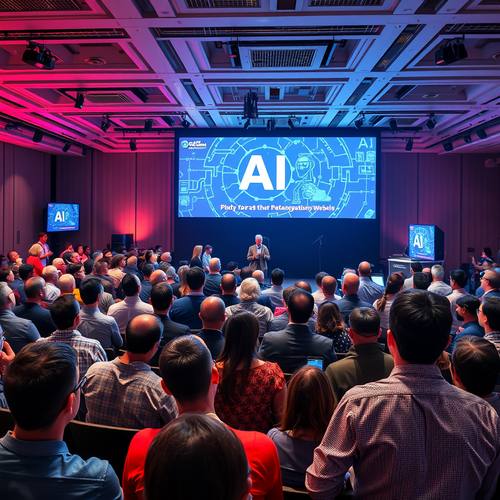

The AgentOps shift from rules to reasoning
AI-native automation is moving beyond rigid triggers to adaptive, context-aware agents, ushering in AgentOps as the discipline for governing this new workforce. With fast ROI, measurable productivity gains, and accelerating enterprise pilots, vendors are converging on hybrid models that blend agentic reasoning with legacy workflows. The near-term agenda: interoperability, governance, and upskilling to keep autonomous systems effective, compliant, and aligned with business goals.
Points clés
- AgentOps is emerging as the operational discipline for managing and governing intelligent AI agents, overtaking static, rule-based tools such as Zapier and IFTTT.
- According to the 2025 Futurum Market Overview, 89% of surveyed CIOs prioritize agent-based AI to increase productivity and automate workflows.
- Commercial solutions including Salesforce Einstein Copilot, Microsoft Copilot Agents, and Google Vertex AI Agents deliver automation ROI in as little as two weeks.
- Early enterprise deployments of Microsoft Copilot Agents reduced customer service response times by 30–50%.
- Futurum’s 2024/2025 decision-maker surveys show 12–18% of organizations already have formalized AgentOps practices or dedicated tools, led by regulated industries, advanced AI labs, and digital-native firms.
- Nearly 45% of large enterprises expect to pilot AgentOps platforms or workflows within the next 18 months.
- New AI-native platforms (Gumloop, Lindy, Relevance AI, VectorShift, Relay.app) and evolved incumbents (Automation Anywhere APA, n8n, Zapier, IFTTT, Airtable, Make) are enabling hybrid, agentic orchestration across systems.
- Major ecosystems are embedding agents at scale: Microsoft Power Platform with Copilot and Agent Framework; IBM watsonx Orchestrate (100+ domain agents, 400+ connectors); Google Gemini Enterprise across Workspace; Salesforce and ServiceNow within their automation layers; Atlassian Rovo Agents in Jira, Confluence, and Bitbucket.
- Roles are shifting as operations professionals become AI automation engineers and business analysts learn to design, monitor, and optimize intelligent workflows.
- Enterprises must implement governance, access controls, observability, and escalation paths to coordinate concurrent agents safely and align outcomes with business objectives.
À retenir
Start small, measure big: pilot one or two high-volume workflows and track simple KPIs (think “response time down 30%,” not “vibes improved”). Embrace hybrid reality—keep your existing automations while layering in agents, with guardrails like access controls, audit trails, and a friendly kill switch (just in case your bots get too enthusiastic). Train a few “AI automation engineers,” document who’s in charge of which agents, and don’t forget observability—because if an agent acts in production and nobody saw the logs, did it really follow policy? Relax, you don’t need a PhD to begin—just a plan, a sandbox, and the good sense to keep humans in the loop.
Sources