The evolution of AI into a foundational utility
Deloitte’s 17th annual Tech Trends report signals a shift from experimental AI pilots to a strategic “reality check” where artificial intelligence functions as a core utility. The analysis highlights the convergence of physical robotics and digital agentic workforces, necessitating a complete redesign of IT infrastructure and organizational architecture. As innovation compounds at record speeds, businesses must prioritize operational scaling and defensive security to remain competitive in an AI-native landscape.
Points clés
- Generative AI reached 100 million users in two months, surpassing the 50-year adoption timeline of the telephone.
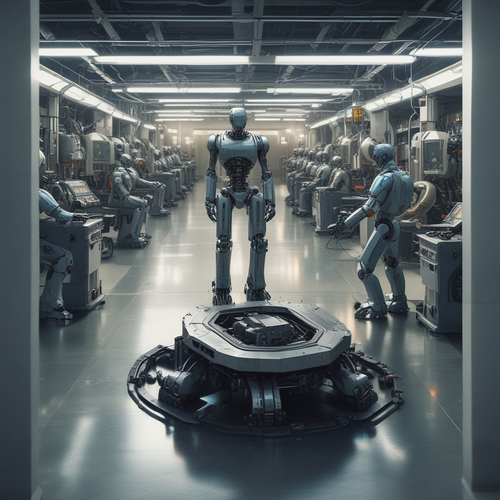
- Projections suggest 2 million humanoid robots will be integrated into the global workplace by 2035.
- Only 11% of organizations currently have AI agents in production, despite 38% running pilot programs.
- Enterprises are shifting to a three-tier “AI Factory” infrastructure including cloud, on-premises, and edge computing.
- AI token costs have decreased 280-fold, yet total enterprise spending is rising due to constant inference demands.
- IT budgets allocated specifically for AI have grown from 8% to 13% as organizations restructure.
- 99% of IT leaders report significant changes to their operating models to accommodate AI-native “squads.”
- Major corporations like Amazon, BMW, HPE, and Toyota are already implementing physical AI or agent-native workflows.
- “Shadow AI” remains a critical governance risk, requiring internal security measures to counter unsanctioned employee use.
- Strategic focus is shifting from SEO to GEO (Generative Engine Optimization) as AI becomes the primary interface for information.
À retenir
If you thought your job was safe just because you aren’t a robot, 2026 has some news for you: even the robots are getting a promotion. We are moving from “tinkering with chatbots” to managing a “silicon-based workforce,” which is just a fancy way of saying your new cubicle mate might be a line of code that doesn’t complain about the office coffee. My advice? Start treating your AI agents like actual employees—onboard them, track their performance, and maybe try not to offend them. After all, when the “AI infrastructure reckoning” hits, you’ll want to be the one orchestrating the bots rather than being the “human-centric process” they decide to automate away. Just remember: if your computer starts asking for dental insurance, you’ve probably gone too far.
Sources
Quiz sur le document: 10 questions