Demystifying semantic structures for data and AI
In this analysis, Casey Hart examines the essential frameworks that allow machines to interpret data beyond mere syntax. By distinguishing between the hierarchical nature of taxonomies and the relational complexity of ontologies, the discussion highlights how these tools build the semantic web. Ultimately, these structures provide the conceptual “web” necessary for modern artificial intelligence to achieve a human-like understanding of information.
Points clés
- Casey Hart, an ontologist and philosopher, defines the distinctions between taxonomy, ontology, and knowledge graphs.
- Taxonomies serve as hierarchical structures for classification, such as the Linnaean taxonomy for species or video game genres.
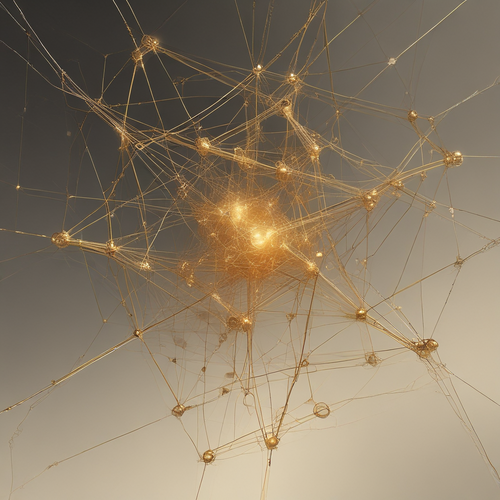
- An ontology is described as a “conceptual web” or a set of n-tuples that helps computers understand how different concepts relate.
- While a taxonomy provides the “skeleton,” an ontology adds the “flesh” by defining relationships and properties between members.
- Knowledge graphs are often used interchangeably with ontologies, though some industry experts distinguish them as the applied data versus the language.
- Metadata and theory are sometimes categorized as the “T-Box” (theoretical) and “A-Box” (assertions) within the field.
- Semantics is the overarching field focused on meaning and understanding rather than just data syntax or structure.
- Tim Berners-Lee’s vision of the semantic web requires machine-readable links that allow computers to pull back meaning.
- In logic, syntax refers to the grammar of a sentence, while semantics refers to the interpretation of its truth value.
- The use of logical connectors like “OR” (inclusive vs. exclusive) illustrates how semantics dictates the real-world interpretation of data.
À retenir
So, if you thought a taxonomy was just a fancy way to organize your sock drawer, you’re only half wrong. It’s the skeleton of your data, and unless you want your AI to be a spineless heap of numbers, you’ll need an ontology to give it some actual meat. Apparently, we’re all just trying to help computers “understand” things so they can eventually tell the difference between you wanting a baked potato or fries—high stakes stuff, truly. My advice? Just keep calling everything a “Knowledge Graph” at parties; you’ll sound brilliant, and half the experts are doing the exact same thing anyway.
Sources
Quiz sur la vidéo: 5 questions