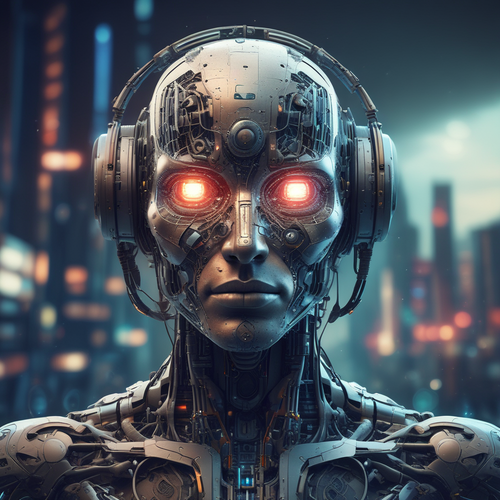

The End of Manual AI Coding is Finally Here
A groundbreaking collaboration between Stanford, MIT, and Crafted has introduced Meta Harness, an open-source framework that enables artificial intelligence to autonomously write and optimize its own operational code. By allowing advanced AI models to iteratively propose, evaluate, and refine their own scaffolding environments, this innovation drastically outpaces human-engineered frameworks across complex benchmarks. This shift from manual coding to recursive self-improvement marks a pivotal, strategic step toward fully autonomous, self-evolving software ecosystems.
Points clés
- Researchers from Stanford, MIT, and Crafted developed “Meta Harness,” a system designed for the end-to-end optimization of model harnesses without human intervention.
- The “harness” is the critical wrapper code surrounding Large Language Models (LLMs) like Claude or GPT that dictates file memory storage, retrieval, and code execution.
- The Meta Harness concept builds on the momentum of Andrej Karpathy’s open-source “auto research” project, which quickly gained over 61,000 stars for allowing models to iteratively self-improve.
- Using Anthropic’s Claude Opus 4.6 as the core “proposer,” Meta Harness recursively inspects, edits, and evaluates its own codebase over long horizons rather than relying on heavily compressed feedback.
- On text classification benchmarks, Meta Harness achieved a top average score of 48 while using significantly fewer tokens (11.4k) compared to prior text optimizers that used up to 50.8k tokens.
- When expanding the framework to mathematical reasoning via the International Math Olympiad (IMO) dataset, AI-discovered retrieval strategies yielded a 4.7-point average performance gain across five held-out models.
- Testing on Terminal Bench 2 revealed that Meta Harness achieved a dominant score of 76.4 with Claude Opus 4.6, outperforming almost all human-designed agentic coding harnesses.
- The success of Meta Harness further validates “the bitter lesson” in AI development, proving that AI-driven, end-to-end optimization consistently beats human-written programmatic heuristics.
À retenir
If you are still manually typing out code for your AI workflows, my recommendation is to simply stop and let the AI build its own house. The data clearly shows that leaving models to blindly experiment with their own toolkits is vastly superior to our puny human attempts at “harness engineering.” So, sit back, relax, and perhaps start learning a tactile hobby like pottery—because soon enough, the software will be completely self-evolving, and your meticulously crafted manual prompts will look as technologically relevant as a horse-drawn carriage.
Sources
Quiz sur la vidéo: 5 questions