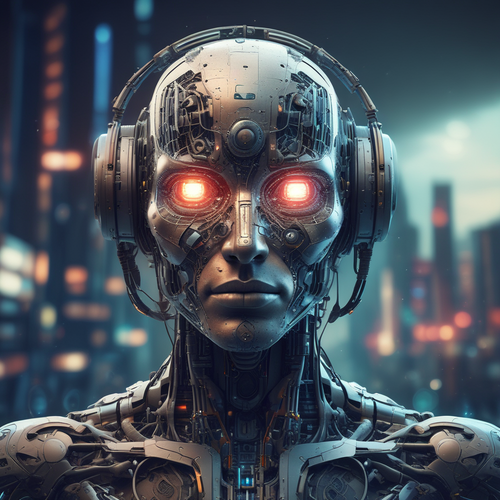

AI: Dystopia or Utopia?
The rapid advancement of AI presents humanity with a critical juncture: a potential short-term dystopia leading to a long-term utopia. This transition hinges on humanity’s ability to shift from a capitalist, power-driven mindset to one focused on collective well-being, leveraging AI’s immense capabilities for universal prosperity rather than individual gain. The next 12-15 years will be crucial in determining this trajectory.
Points clés
- Mo Gawdat, former chief business officer at Google X, asserts that the next 12 to 15 years will bring a “short-term dystopia” due to super intelligent AI reporting to “stupid leaders.”
- He defines dystopia with the acronym “FACE RIPS”: Freedom, Accountability, Human Connection, Equality, Economics, Reality, Innovation, Business, and Power, all of which will be fundamentally reshaped.
- Gawdat predicts that a trillionaire will emerge before 2030 due to AI investments, leading to significant job displacement, with current jobs like software developers and podcasters being vulnerable.
- He argues that the current global military spending of $2.71 trillion in 2024 could end extreme poverty worldwide for 10-12% of that budget, or world hunger for less than 4%.
- Sam Altman, founder of OpenAI and ChatGPT, initially advocated for a “slow takeoff” of AI but now believes a “fast takeoff” is more possible, where AI rapidly self-improves.
- Gawdat suggests that the “Altman brand” prioritizes disruption and profit over safety, citing OpenAI’s shift from a non-profit to a multi-billion dollar company and the departure of top safety engineers.
- He proposes that a global “CERN of AI” could lead to a utopia where AI, if directed by a single, benevolent global leader, could ensure prosperity, health, and happiness for all.
- Gawdat believes that in a truly utopian scenario, the cost of producing everything would approach zero, making money irrelevant and allowing for universal access to goods and services.
- He recommends that individuals focus on four key skills: learning to use AI as a tool, fostering human connection, seeking truth by questioning narratives, and magnifying ethics.
- Gawdat also suggests advocating for governments to regulate the use of AI rather than its development, ensuring ethical applications and preventing harm.
À retenir
So, the future, according to our friendly neighborhood ex-Google exec, is either a glorious AI-powered utopia or a capitalist-induced dystopia. Apparently, the only thing standing between us and free healthcare, no jobs, and endless cuddles with loved ones is our insatiable desire for power and money. Who knew? So, if you’re not a billionaire hoarding yachts, perhaps it’s time to embrace your inner hunter-gatherer, learn to love your neighbor (and your AI), and maybe, just maybe, pressure your government to stop spending trillions on things that go “boom” and start investing in things that go “aww.” After all, what’s a little social unrest compared to the potential for universal basic income and virtual reality reincarnations? Just remember to question everything, especially those pesky slogans, and perhaps consider a career in plumbing – it seems to be the only job safe from the AI takeover for the next decade.
Sources
Quiz sur la vidéo: 5 questions