
Human-AI partnerships to drive $2.9 trillion economic shift
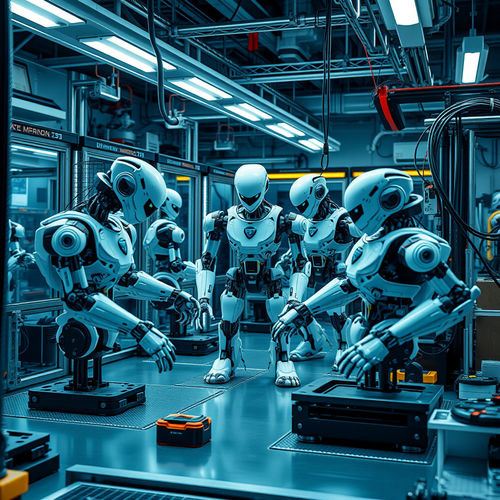
A landmark report by the McKinsey Global Institute outlines a future where humans, AI agents, and robots collaborate to unlock $2.9 trillion in productivity by 2030. While 57% of current work hours are technically automatable, the shift emphasizes a transformation of workflows and a surge in demand for “AI fluency” rather than simple job replacement. Success depends on moving beyond “pilot purgatory” to redesign entire sectors, from healthcare to production, around hybrid teams.
Points clés
- McKinsey Global Institute identifies three key actors in the future workforce: humans, AI-powered “agents” for nonphysical tasks, and “robots” for physical tasks.
- Approximately 57% of work hours in the United States are currently technically automatable, though actual adoption hinges on labor costs and policy.
- Redesigning workflows to integrate these technologies could unlock $2.9 trillion in US economic value by the year 2030.
- Human skills remain highly relevant, with over 70% of current competencies remaining vital but requiring new applications.
- The report introduces the Skill Change Index (SCI), noting a sevenfold increase in the demand for “AI fluency” among workers.
- The average number of skills required per job posting has increased from 54 to 64 over the past decade.
- In customer operations, conversational AI can resolve up to 80% of routine calls, effectively halving the cost per interaction.
- Generative AI in medical writing has been shown to reduce human “touch time” for clinical reports by 60%.
- 60% of the total projected economic gains are expected to come from sector-specific domains like clinical diagnosis.
- Management roles are evolving from supervising individuals to orchestrating hybrid teams of humans, digital agents, and physical robots.
À retenir
So, the robots aren’t coming for your job; they’re just coming to be your new, highly efficient, and slightly annoying overachieving coworkers. With a $2.9 trillion carrot dangling in front of us, you’d better start practicing your “AI fluency”—which is basically a fancy way of saying you need to learn how to talk to your toaster without losing your temper. If you can survive “pilot purgatory” and stop treating AI like a scary IT project, you might just find yourself “orchestrating” a team of machines. Just try not to feel too redundant when the software writes your reports 60% faster than you ever could. Cheers to the future of work, where the coffee breaks remain human, for now.
Sources
Quiz sur le document: 10 questions